In the classes I teach, I like to say that we always meet back at downward facing dog. It’s the pose you return to between sun salutations and the place you rest when you’ve skipped a chaturanga. It’s also a good overall body stretch, and your head is below your heart, which can help you wake up a little.
But a lot of people don’t love it, at least not at first. Tight hamstrings and tight calves make it feel like a fight, and it can put a lot of pressure on your wrists. So let’s go through the small fixes that make it feel good, starting from your hands and working back.
Set up your downward dog
Start in tabletop. Tuck all ten toes under and lift your hips high up and back. Then release your heels down toward your mat. Then check in with these points, one at a time.
Your hands. Hands are at shoulder distance apart, middle fingers pointing toward the front of your mat. Spread your fingers nice and wide and press into each finger pad. Ground down through your fingers so much that your palms might just slightly lift. You’re really pushing through your hands and lifting up, energetically lifting through your forearms.
Your arms and shoulders. Your biceps start to rotate in, and that broadens the back side of your body. You don’t want your shoulders hunching up by your ears.
Your hips. Your hips come high, up and back.
Your legs. If this is too much on your hamstrings, just bend your legs. Downward dog is a hamstring stretch, so it’s okay if your knees are bent. What you want is a nice long spine. As you warm up into your hamstrings, you can begin to straighten your legs.
Your feet and heels. Your feet are in line with your hips. Your heels draw toward the floor. If they’re really lifted, no worries. That usually just means your calves are tight. You’re simply starting to press them down toward the floor, even if they don’t reach. Then, without actually moving your heels, energetically push them toward the outer edges of your mat. You’ll feel your inner thighs start to rotate open and your legs get strong.
Your head. Let your head relax. You’re not looking past your fingertips. Keep your head and neck nice and loose.
Move before you hold
Your first down dog of the day doesn’t need to be still. Pedal your legs by bending and straightening one leg at a time. Reach a heel toward the mat each time to create more space in your calves and ankles. Give your head a little shake. You can wobble it yes and no to release tension in your neck. Shake your hips side to side. Lift both heels high, then release them.
Once you’ve moved around, find a static down dog for a few breaths. That’s when I want you to check your points of alignment.
Common downward dog mistakes
- Locking your legs straight at the expense of your back. Bend your knees as much as you need so your spine can stay long.
- Forcing your heels down. Lifted heels are okay. Press them toward the floor gently and let your calves open over time.
- Hunching your shoulders. Rotate your biceps in and broaden your back so your shoulders stay away from your ears.
- Looking forward. Let your head hang loose instead of craning to look past your fingertips.
- Holding your breath. Keep breathing deeply in and out through your nose.
When downward dog isn’t working for you
Your hamstrings are screaming. Bend your legs a lot. You can also walk your feet a little further forward. And if downward dog is too big of a stretch on your hamstrings, take child’s pose, hips to heels and arms long.
Your wrists need a break. If downward dog feels like too much pressure on your wrists, come back to child’s pose. You can take your knees wide and your feet together and release your hips toward your heels. On those days I also have whole classes that skip it. My downward dog free class is for all of you who just can’t stand downward facing dog or just need a break for your wrists and hands. We still flow.
You want to build shoulder strength without your hands. Try dolphin pose. It’s set up just like a downward facing dog, but on your forearms. Press your hips high up and back and press your heels down toward the floor. It’s challenging for me because my upper back and shoulders tend to be a little weaker. If keeping your forearms parallel is too much, interlace your hands to make a little triangle.
If wrist or shoulder pain sticks around, check in with your doctor.
Practice it with me
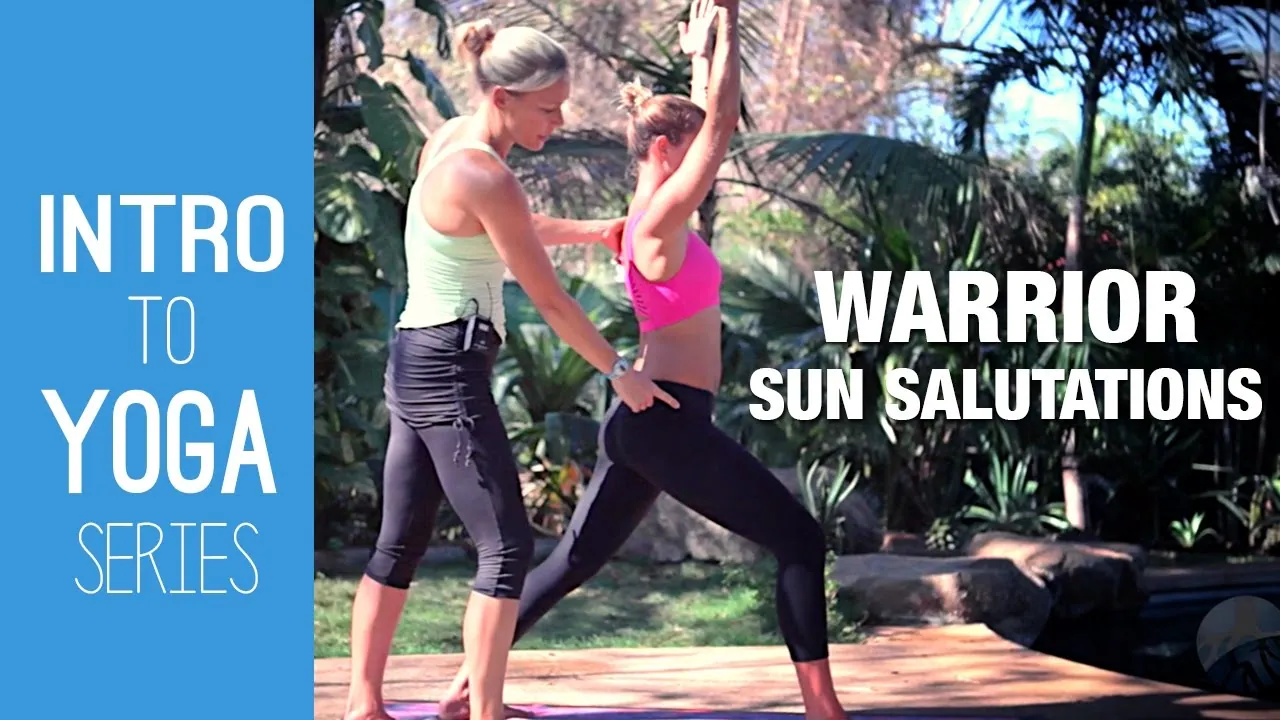
- Warrior & Sun Salute Yoga Tutorial, Intro to Yoga Series (30m 57s). Where I break down down dog alignment and how it fits into a sun salutation.
- Morning Yoga, 20 Min Wake Up Sequence (23m 18s). Lots of pedaling and warming up in down dog.
- 30 Minute Slow Flow Yoga Class (35m 49s). Time to move in down dog, then hold it with alignment cues.
- Deep Stretch Yoga Class: Hamstrings & Hips (34m 45s). For the tight hamstrings that make down dog hard.
- No Dogs Allowed: a 30 Minute Downward Dog Free Yoga Class (30m 12s). For days your wrists need a break.
FAQ
Is it okay to bend my knees in downward dog?
Yes. Downward dog is a hamstring stretch, so it’s okay if your knees are bent. Keep your spine long, and straighten your legs gradually as your hamstrings warm up.
Why don’t my heels touch the floor?
Usually tight calves. That’s okay. Press your heels toward the mat even if they don’t reach, and pedal your legs to stretch your calves.
Where should I look in downward dog?
Let your head relax. You’re not looking past your fingertips.
What can I do instead of downward dog if my wrists hurt?
Child’s pose, with your hips toward your heels. You can also try a class that skips down dog entirely, like my No Dogs Allowed class.
How far apart should my hands and feet be?
Hands at shoulder distance apart. Feet in line with your hips.
Pose by pose: Downward Dog, Three-Legged Dog. Or browse all 50 poses in the Five Parks Yoga pose library.
Practice it with me



Get new classes from Erin
Free classes, retreat dates and the occasional note. Unsubscribe any time.