I’ll be honest with you. I personally like half pigeon. Not everyone does. It’s a deep hip opener, and if your hips are tight it can feel like a lot. But it’s also great for your glutes and hips as well as your low back, and with a few adjustments you can find a version that feels like a good stretch instead of a struggle.
The most important cue I give in pigeon is this one: you want to feel a stretch, but no discomfort. If it’s intense, you breathe. If it’s painful, you back off. Then you make an adjustment. Let’s go through those adjustments.
How to get into half pigeon
I usually bring you into pigeon from downward facing dog.
- Lift one leg high. From down dog, lift your right leg up behind you.
- Bring your knee toward your wrist. Draw your right knee toward your right wrist, and your right toes toward your left wrist. Or whatever works for your knees. Even if your foot needs to be back halfway down your mat, that’s fine.
- Set your shin down. Release your right knee down onto your mat. Your back leg extends long behind you with the top of your back foot flat to the floor.
- Lengthen first. Before you fold, set your spine upright. Use the muscles along your spine to lift and pull you back and up.
- Fold if it feels right. Walk your hands forward and come down onto your forearms. You can rest your forehead on your hands or your fists. A block works too. Staying upright on your hands is a great option too.
- Breathe. Three breaths is plenty when you’re starting. Try to slow your breath down and even it out.
- Come out gently. Come back up onto your hands and tuck your back toes under. Step back to downward facing dog. Pedal out your feet, then take the other side.
Where your front foot goes
The closer your front toes get toward your opposite wrist, the deeper the hip stretch is going to be. So if you feel very open in your hips and want more, walk your shin toward parallel with the front of your mat.
If your hips are tighter, bring your front heel closer in toward you. This is also my first cue if you feel any discomfort in your knee. Bring your foot further in and see how it changes.
Use a block (or a pillow)
If your hip is really tight and pigeon is very uncomfortable, set a block underneath the hip of your front leg. It supports you so both hips can stay level and squared. No block? A pillow or a blanket works too.
You can also use a block under your forehead when you fold forward. If that’s too much, turn your block upright, or make fists and rest your forehead on your fists. Lots of options.
The option that’s always there: reclined pigeon
Whenever half pigeon is presented to you in a class, you can always lie on your back and take reclined pigeon instead. Here’s how:
- Lie on your back with your feet on the floor.
- Cross your right ankle over your left knee.
- Lift your left foot off the floor and interlace your hands around the back of your thigh or your shin.
- Pull your left knee in while you press your right knee open toward the front of your mat.
- Keep your shoulders and hips flat to the floor.
You’ll feel it in your right hip and glute. Then switch sides.
Standing pigeon, for balance days
Pigeon shows up standing in a lot of my flows too. From standing staff, cross your right ankle over your left knee with your hands at your heart. Then sink down as if you’re sitting back into a chair.
Common pigeon mistakes
- Forcing the front shin parallel. Parallel is the deep version. Bring your heel in until it feels like a decent stretch without discomfort.
- Ignoring your knee. If you feel it in your knee, bring your foot further in or prop your hip up on a block or a pillow.
- Letting your hips tip to one side. A block under your front hip helps keep both hips level and squared.
- Collapsing before you lengthen. Set your spine upright first, then fold.
- Pushing through pain. Intense is okay, painful is not. Back off and adjust.
If you’ve had a knee or hip injury, check in with your doctor about which version is right for you.
Practice it with me
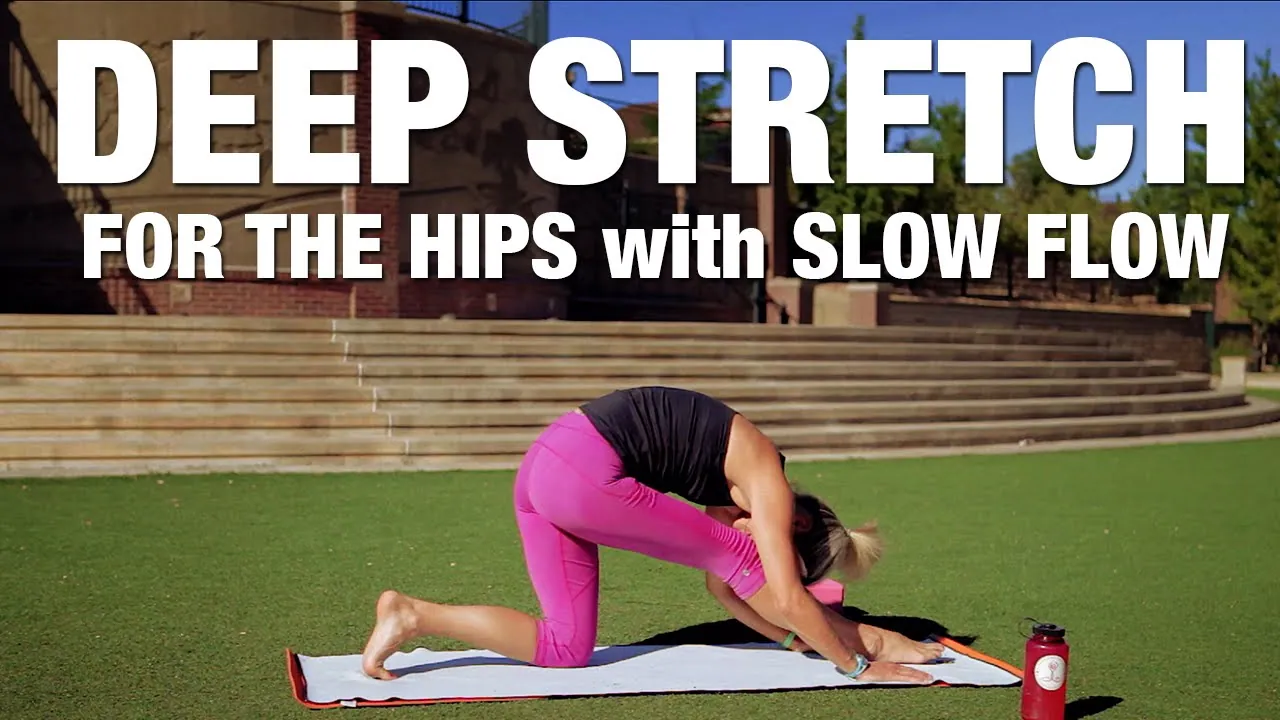
- Deep Stretch for Hips with Slow Flow Yoga (1h 5m 45s). A whole class with an emphasis on pigeons, block included.
- Deep Stretch Yoga Class: Hamstrings & Hips (34m 45s). Half pigeon with knee-friendly options.
- 20 Minute Deep Stretch Yoga Class (21m 10s). A short class that includes pigeon on both sides.
- Flow & Hold Yoga Class (52m 11s). Half pigeon with the reclined option cued in.
- Lower Back & Hip Stretch & Strengthen Yoga Class (39m 2s). Pigeon as part of a low back and hip practice.
FAQ
Does my front shin need to be parallel to the front of the mat?
No. Parallel is the deeper version for open hips. If you’re tighter, bring your front heel closer in.
What should I do if pigeon hurts my knee?
Bring your front foot further in, or prop your hip up on a block or a pillow. You can also take reclined pigeon on your back instead.
Why use a block under my hip?
If your hip is really tight, a block supports you so both hips can stay level and squared.
Is there an easier version of pigeon pose?
Yes. Reclined pigeon is always an option. Lie on your back and cross one ankle over the opposite knee.
How long should I hold pigeon?
In many of my flows we hold for about three breaths per side. In deep stretch classes we hold longer. Either way, stay where you feel a stretch but no discomfort.
Pose by pose: Pigeon, Reclined Pigeon. Or browse all 50 poses in the Five Parks Yoga pose library.
Practice it with me


Get new classes from Erin
Free classes, retreat dates and the occasional note. Unsubscribe any time.