Years ago I made a hamstring class because people kept asking for it. A lot of them were athletes (runners especially) whose hamstrings get very, very tight. What they told me made sense. They’d do a few quick stretches before a run, a little of this and a little of that, and then go. The real stretching that actually opens the hamstrings kept getting skipped.
If that sounds like you, you’re not doing anything wrong. You just haven’t given your hamstrings the slow version yet. Here’s how I teach it.
The one rule: a long spine beats straight legs
This is the cue that matters more than any other. In a hamstring stretch, I would rather have you bend your legs a lot so your spine can stay nice and straight and long.
When your hamstrings are tight, the natural thing to do is round your back and reach for your toes. It looks like a deeper stretch. It isn’t. Your back is doing the bending and your hamstrings are mostly just watching.
So bend your knees as much as you need. Then hinge forward from your hips, with your spine long and your head in line with your spine. It’s not a rounding of your spine. It’s a hinging of your hips. In a seated forward fold, it might not look like a very deep stretch at all. Take it only to the level where you can keep your spine long. That level is your stretch.
Start active in staff pose
Most of my hamstring work starts on the floor in staff pose, with your legs long in front of you. It doesn’t look like much at first, but it’s a very active pose, and if your hamstrings are tight it might already feel like a stretch.
Rock side to side a little so you can feel your sitting bones on the floor. (You don’t need to yank the flesh out of the way, which you sometimes hear in yoga classes. That can add extra strain.) Sit up tall, with your shoulders over your hips. Point your toes up toward the ceiling and engage your quads, the tops of your legs.
If sitting upright is already a lot of work, rest your hands on the floor beside you for support. Maybe come up onto your fingertips.
Keep your quads on
This sounds backwards, but it’s one of my favorite cues for tight hamstrings. Stay active in the fronts of your legs. When your quads are engaged, it helps your hamstrings open, and it keeps them safe from overstretching.
The same goes when you’re holding onto your leg in a standing stretch. Engage the quad of that leg, and don’t put a lot of pressure on it with your hands. You’re not trying to pry it open.
Use a strap (or a towel)
A strap is great for tight hamstrings. If you don’t have one, use a towel, or honestly even a shirt. In a seated forward fold, loop it around the bottoms of your feet and sit upright. Then hinge forward and walk your hands down the strap.
Maybe that means you’re holding the strap and staying pretty upright. That’s a great place to start. If your hands reach your feet, take hold of the outsides of your feet, or wrap your peace fingers around your big toes.
You can do the same thing lying on your back. Keep one foot on the floor or one leg long, and lift the other foot up toward the ceiling. Hold the back of your leg with both hands, or loop your strap around your foot.
Let your exhales do the work
This is where the flexibility actually comes from. You hold the pose, and with each exhale maybe you go a little bit deeper. Maybe it’s so small a movement nobody could see it. See if you can feel it.
That’s the whole secret, and it’s not a very exciting one. The longer you hold, and the more often you practice over time, the more you’ll notice the change in your hamstrings. It’s also why I like hamstring classes you can do over and over again.
After a few active breaths, I’ll often give you a softer, more passive version. Round down and let your forehead relax toward your knees for three breaths. That’s the one time I’m happy to see a rounded back.
Forward folds and down dog, too
You don’t need a seated class to work on this. In a standing forward fold with very tight hamstrings, come up onto a block so you can still work your legs toward straight. Even if your hands are way up at that height, that’s fine. And rag doll is a gentle place to rest: bend your legs a lot and let your torso rest on your thighs.
Downward facing dog counts too. Down dog is a hamstring stretch, so it’s okay if your knees are bent. As you start warming up, you can begin to straighten your legs. You don’t have to be straight yet. You’re just moving in the direction of straighter legs.
Practice it with me
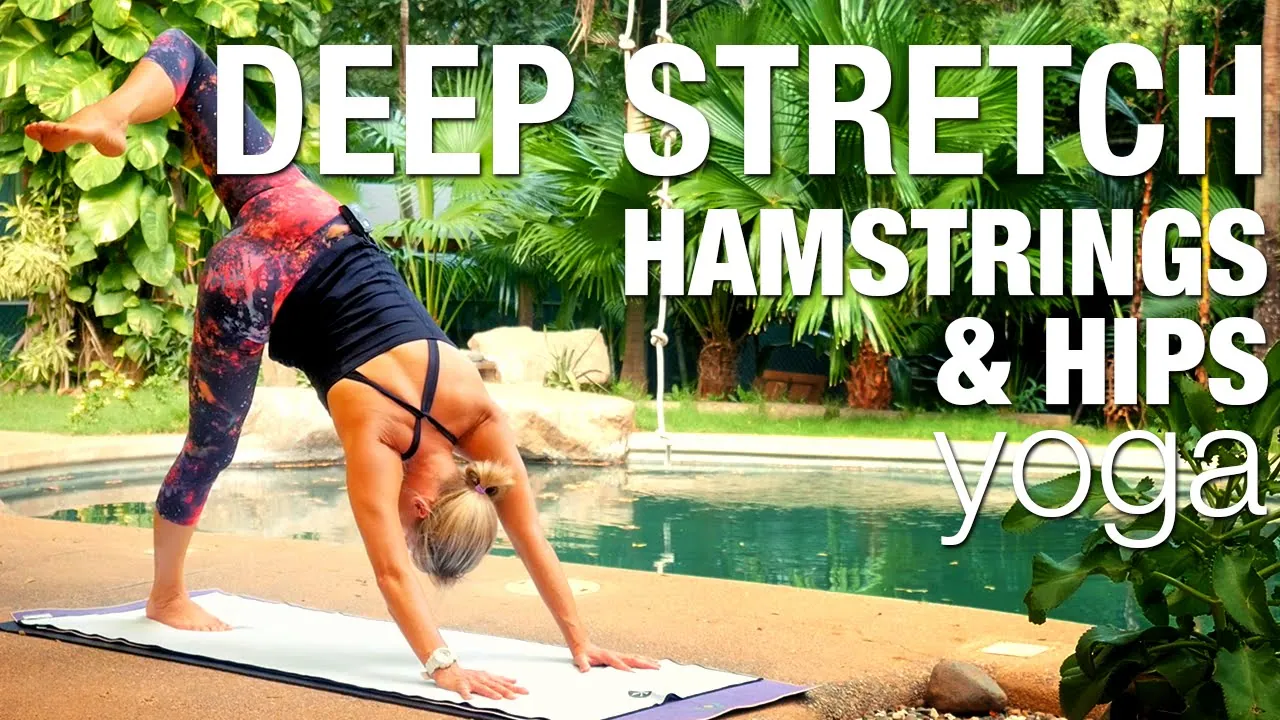
- Deep Stretch Yoga Class: Hamstrings & Hips (34m 45s). No chaturangas and very few standing poses. (Listen for the howler monkey.)
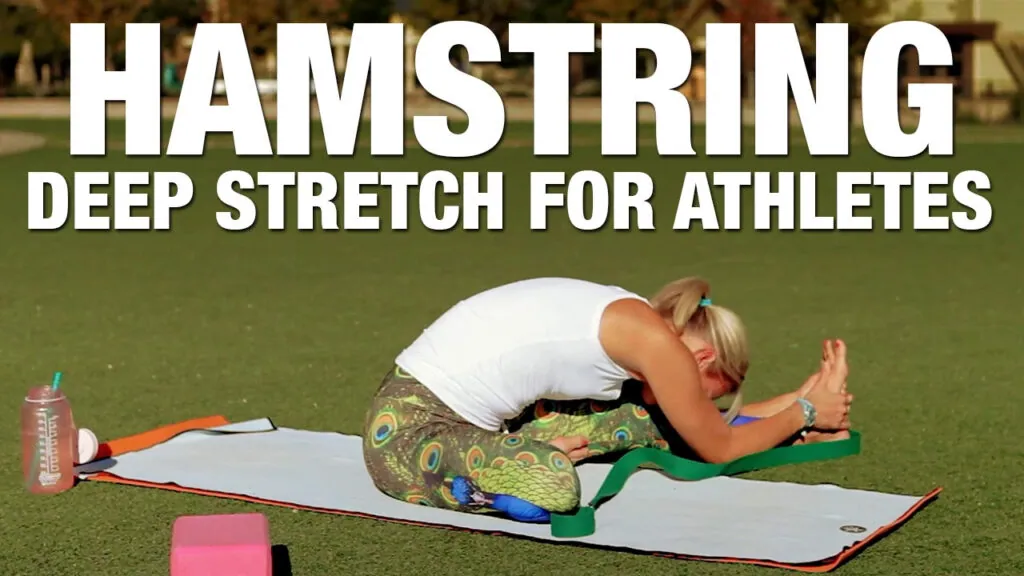
- Hamstring Deep Stretch Class for Athletes (26m 57s). The one people asked for, all on the floor, with a strap. It’s also one of the classes in my New Year’s 30 day challenge.
- Slow Flow Yoga Class with Hamstring Focus (29m 51s). Hamstring strength and flexibility together.
- Athletes Warm Up & Cool Down Combo (30m 20s). Reclined hamstring stretches with a strap.
- Grounded Deep Stretch: 10 Minute Yoga Class (13m 8s). Rag doll and a short, slow stretch.
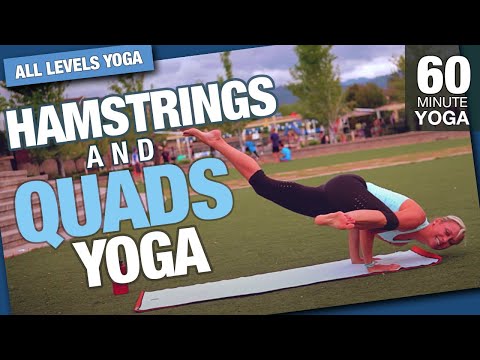
- Hamstrings & Quads Yoga Class with Hurdler’s Pose (1h 0m 27s). For when your hamstrings are ready for a peak pose.
If you’re a runner or play a sport, my 30 Day Athletes Yoga Challenge is a good place to make this a habit instead of a one-time thing.
Practice it with me


Get new classes from Erin
Free classes, retreat dates and the occasional note. Unsubscribe any time.