If you’ve taken more than a couple of my classes, you’ve lunged with me. A lot. Low lunge is how we step forward out of downward dog, and crescent lunge is usually right behind it. They show up so often that it’s easy to stop paying attention to them, which is exactly when a front knee starts drifting or a lower back starts sagging.
And the names don’t help. Crescent moon and crescent lunge sound like two ways of saying the same thing, and low lunge sounds like their cousin, but they’re three different shapes with slightly different jobs. So here’s how I set each one up, and the small cues that keep your knees and your low back happy while you’re in them.
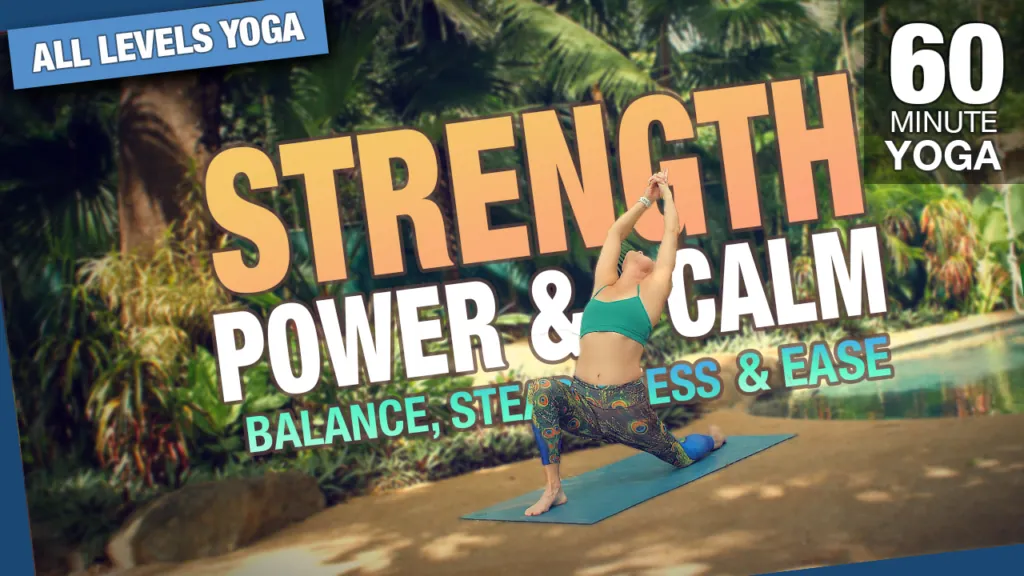
Low lunge, crescent moon and crescent lunge
Here’s what I mean when I call them out in class.
- Low lunge. Front foot between your hands, front knee bent, back leg long behind you. Your back knee can be down on the floor or lifted.
- Crescent moon. Your back knee stays on the floor and your arms reach up overhead. It’s the supported version.
- Crescent lunge. Your back toes are tucked, your back knee lifts off the floor and your arms reach up.
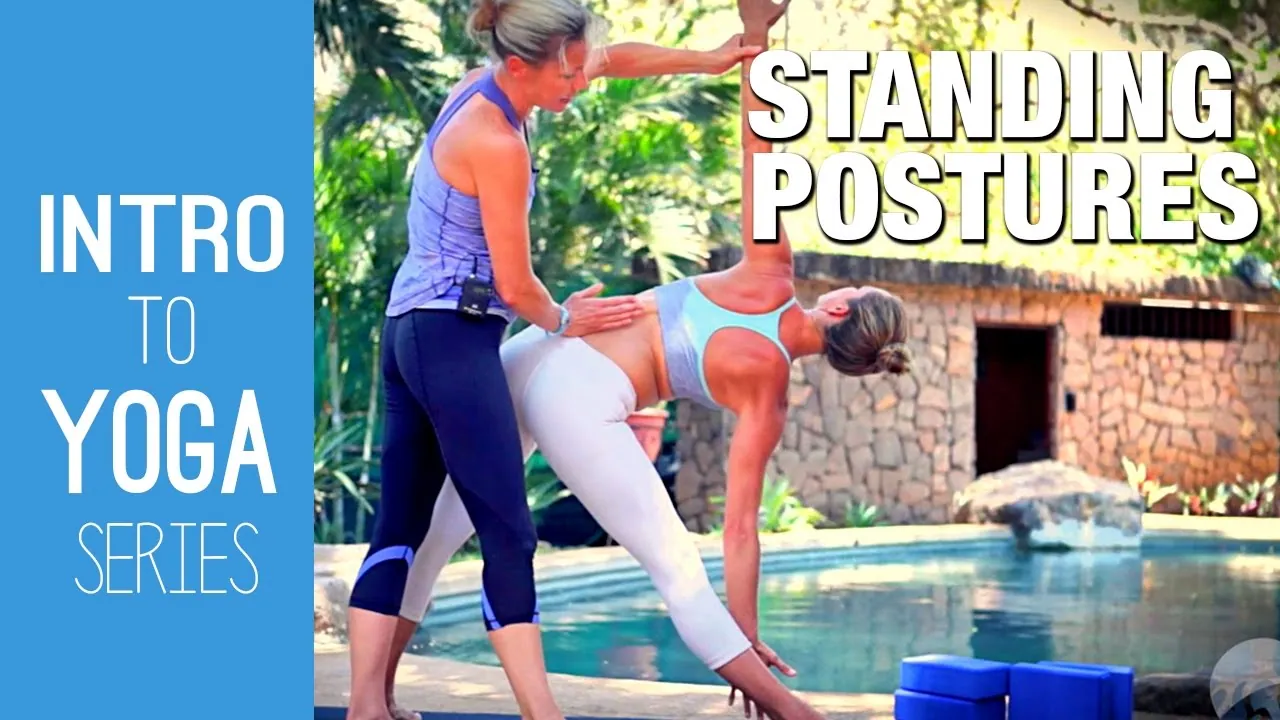
In my Standing Postures Tutorial from the Intro to Yoga Series, I walk through all three with my friend Carrie, who was very patient while I made her hold them for a long time.
Getting into your low lunge
Step your right foot forward between your hands. If it doesn’t make it all the way there in one go, that’s fine. Even if you need to take ten steps to get there, you can use your hand to help drag your foot forward or just place it.
Before you go any further, find a 90 degree angle in your front leg, with your knee stacked directly over your ankle. Then walk your back leg back so it’s nice and long.
If it’s hard to get into this position, put your hands on blocks. No blocks? Soup cans or a pile of books work too. What we want is a nice extended spine, and it’s a lot easier to find that when the floor comes up to meet you.
Now check your hips. If one is creeping up, draw it back so both are level. Your spine is one straight line from your tailbone to the crown of your head, and your gaze lands two or three feet in front of your toes, which keeps your neck long.
The knee rule I care most about
Your front knee works toward stacking right over your ankle. You’ll sometimes hear me cue the knee to creep a little past the ankle to get deeper into the hips, but only when your back knee is on the floor. That back knee on the floor is the support that makes the extra bend okay.
When your back knee is lifted, keep that 90 degree angle.
Your back knee deserves some care too. If kneeling feels like too much, put a blanket under your knee, or roll the edge of your mat over to get extra cushion. Your back foot can be flat with the top of the foot on the floor, or you can keep your toes tucked. Choose whichever feels more stable for you.
Crescent moon: the supported version
From low lunge with your back knee down, bring your spine upright and stack your shoulders right over your hips.
Then extend your arms up overhead, working toward straight arms with your fingertips spread and active. Then spin your pinky fingers slightly in. That small spin broadens your back. Wrists over shoulders, shoulders over hips.
This is a big stretch for the front of your back leg, right through your quad and hip flexor. Sink into your hips, but stay active in your legs so there’s no collapsing in your low back. I like to cue drawing your inner thighs toward each other to keep the integrity of the pose while you sink.
Want a variation? Interlace your fingers and press your hands onto your front knee. Use that press to work your shoulders back over your hips, maybe lift your chest and your chin. In my Hip Mobility & Flexibility class I call crescent moon a really good stretch to get deep into the hips, and that’s the version we use.
Crescent lunge: the strong version
From low lunge, tuck your back toes under, keep your back heel lifted high and lift your back knee off the floor. Your back heel should stack directly over your toes, not slanting off to one side. Engage your back quad so it lifts the back of your leg up.
Then rise up slowly and with control. We’re not just flinging our arms up. Bring your wrists over your shoulders and your shoulders over your hips.
This is where the low back cue comes in. Draw your tailbone down toward the floor. If you had a little sway in your low back, you’ll feel it even out, and drawing your tailbone down automatically engages your core. It’s like shortening the front line of your body.
When your arms go up, your shoulders love to hunch toward your ears. Draw them down and keep your neck long.
Common lunge mistakes
- Front knee shooting past your ankle with your back knee lifted. Back off the lunge a little until your knee stacks over your ankle.
- One hip creeping up or forward. Put your hands on your hip bones and give yourself a little adjustment.
- A big sway in your low back. Draw your tailbone down and keep your legs active.
- Shoulders up by your ears. Spin your pinky fingers in and draw your shoulders down.
Easier options
There’s no prize for skipping the support. Keep your back knee down and take crescent moon any time crescent lunge feels like too much. If it’s intense, you breathe. If it’s painful, you back off and adjust. If you’re working with a knee injury, check with your doctor about which version is right for you.
Practice it with me
- Standing Postures Yoga Tutorial (27m 32s). The full breakdown of low lunge and crescent lunge, plus triangle and side angle.
- 60 Minute Deep Stretch Yoga Class (1h 3m 51s). Long holds in low lunge and crescent moon, with a blanket under your knee if you want it.
- Hip Mobility & Flexibility Yoga Class (1h 1m 8s). Crescent moon with your hands pressing on your knee.
- Winter’s Embrace: Solstice Yoga Flow (45m 51s). Crescent lunge flowing into a crescent dip, back knee toward the floor.
- 60 Minute Run the Year Yoga Class (1h 2m 49s). Crescent moon with the inner thighs drawing in. It’s also part of my free 30 Day Athletes Yoga Challenge.
If you’d like me to look at your lunges in person, come practice with me at our spring and November retreats in Nosara. Want to learn why we cue it this way? That’s what yoga teacher training in Costa Rica is for.
FAQ
What’s the difference between crescent moon and crescent lunge? In crescent moon your back knee stays on the floor. In crescent lunge your back toes are tucked and your back knee lifts. Both have your arms reaching up overhead.
Can my front knee go past my ankle in a lunge? Only when your back knee is on the floor to support you. With your back knee lifted, work toward keeping your knee stacked over your ankle.
What do I do if my back knee hurts on the floor? Put a blanket under your knee or roll your mat over for extra cushion.
How do I keep my low back from sagging in crescent lunge? Draw your tailbone down toward the floor. It engages your core and evens out the sway.
Practice it with me


Get new classes from Erin
Free classes, retreat dates and the occasional note. Unsubscribe any time.