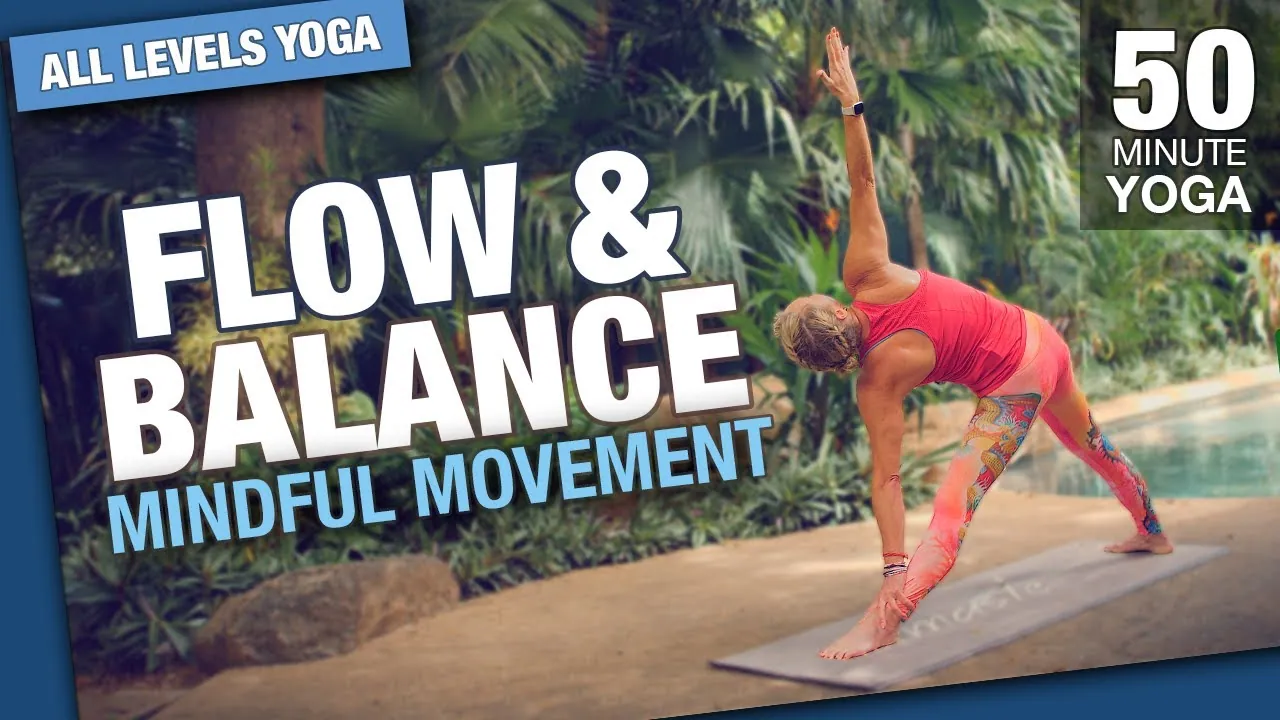
Triangle pose looks simple from across the room. Straight legs and one arm reaching up. Done. Then you get into it and realize there’s a lot going on, and most of it is happening in places you can’t see without a mirror.
The thing I see most often is triangle turning into a reach for the floor. The bottom hand goes down and the spine rounds to help it get there. Suddenly the pose is about touching the mat instead of being long. So here are the cues I keep coming back to in class. They’re small, but they change the whole pose.
Set up your stance first
I usually bring you into triangle from Warrior 2, so your hips and shoulders are already open to the side of the mat.
Your stance should be long. I’m tall, so my stance is almost (but not quite) the length of my mat. If you’re shorter, you’ll find a shorter stance, and that’s right for your body.
Your front toes point straight ahead, right in front of your front heel. Your back toes come in to about a 45 degree angle. If that’s too much on your ankle, or you have an injury, bring your back toes in line with your heel. We’re working toward 45 degrees, not forcing it.
Getting into triangle pose
- Straighten your front leg and extend your arms long, parallel to the floor. Gaze out across your front fingertips.
- Draw your tailbone down and engage your core. Engage your triceps and actively reach through your fingertips in both directions.
- Keeping your legs where they are, hinge forward and reach as far forward as you can with your front arm.
- Then let your front hand come down and your back arm reach up. Your two arms stay in one line.
- Roll your top hip and top shoulder open so the side of your body faces the side wall.
- Breathe here. Then come all the way up the same way you went down, lifting with your core.

Where your bottom hand goes
Your hand can come to your thigh or your shin. Your ankle works too, and so does a block at any height. If you have the flexibility, it can come to the floor.
But here’s the cue that changes triangle the most. Wherever your hand lands, take the weight out of it. Rest it lightly, or hover it. Use the strength in your core to hold your upper body up instead of resting your weight on your hand. You’re not dumping weight into that bottom hand. You’re lifting.
When I watch a triangle where the hand is on the floor but the spine is rounded and the shoulders are hunched, I’ll cue you to back out of it. Lift up and extend one long line from your tailbone to the crown of your head. A higher hand on a long spine is a better triangle than a lower hand on a collapsed one.
Your front leg
We’re working toward a straight front leg. But if that’s way too much right now, take a slight bend in your front knee. As long as your knee is bent a little and your spine is long, that’s fine.
What I’d rather you avoid is sticking your butt out behind you to get deeper. If you notice that, draw your tailbone down and stack your shoulders back over your hips.
Your gaze
You have three choices. You can look down at the floor, which helps with balance. You can look out to the side wall. Or you can look up toward your top fingertips, which is the most challenging for your balance.
Whichever you choose, your head stays in line with your spine. Only your gaze moves. Then see if you can lift through your top fingertips so you’re not collapsing into your bottom side.
Reverse triangle is the warm up
In a lot of my flows you’ll hear “inhale reverse triangle, exhale triangle.” Reverse triangle is the transition that sets you up. Straighten your front leg, slide your back hand down your back leg and reach your top arm up and back. Think side bend, not back bend. It’s a nice stretch through the side of your body, so when you reach forward into triangle, there’s already some length there.
Common triangle mistakes
- Rounding your spine to reach the floor. Bring your hand higher, to your shin or a block, and lengthen.
- Leaning on your bottom hand. Take the weight out of it and use your core.
- Forcing a straight front leg. A slight bend in your front knee is okay.
- Sticking your butt out. Draw your tailbone down.
- Cranking your neck to look up. Keep your head in line with your spine and let only your gaze move.
Easier options
Use a block under your hand. Bring your hand to your thigh instead of your shin. Shorten your stance a little. Bring your back toes in line with your heel if your ankle needs it. Every one of those still lets you keep a long spine and a strong core, which matters more than how low your hand goes.
If you’re working with an injury, check in with your doctor about which version is right for you.
Practice it with me
- Standing Postures Yoga Tutorial (27m 32s). From my Intro to Yoga Series, where I break triangle down step by step with both a side view and a front view.
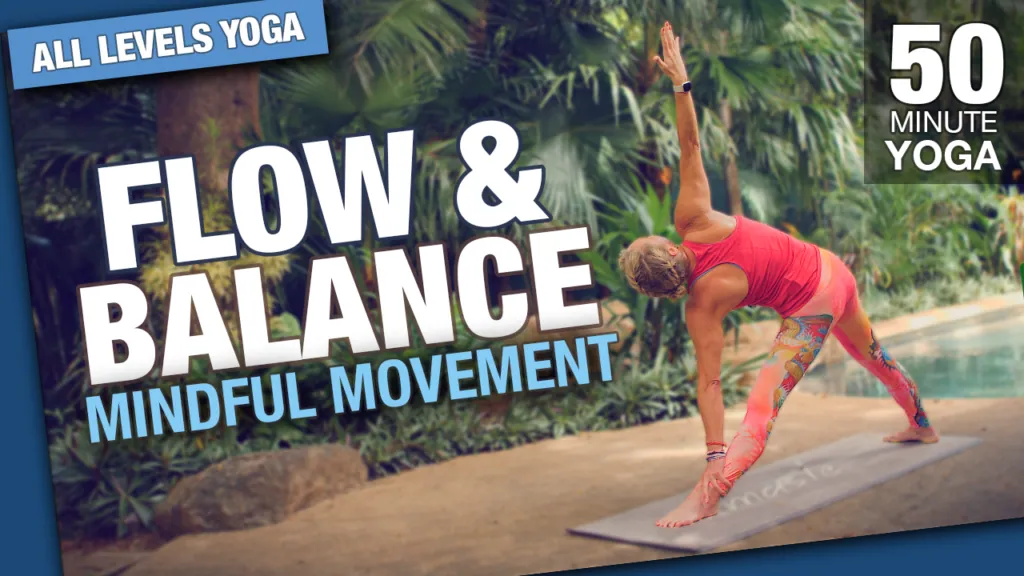
- Flow & Balance Yoga Class (50m 3s). Reverse triangle into triangle, with your body open to the side.
- Hold & Flow Yoga Class (46m 47s). We hold triangle, so there’s time to check that you’re not collapsing into your hand.
- Hip Mobility & Flexibility Yoga Class (1h 1m 8s). Triangle with a strong reminder to use your core instead of your bottom hand.
- Powerful & Calming Vinyasa Flow & Yin Fusion (50m 39s). Rolling your top shoulder and hip into one line, then looking up.
- Solar Plexus Chakra Yoga Class (48m 55s). Triangle with your hand just lightly on your shin. It’s also part of my free 7-week chakra experience.
If you like to practice with music playing, my yoga playlists are here. And if you’d like hands-on cues for your triangle, come practice with me at our spring and November retreats in Nosara.
FAQ
Is it okay to bend my front knee in triangle pose? Yes. We’re working toward a straight leg, but a slight bend in your front knee is fine.
Do I have to touch the floor? No. Your hand can rest on your thigh or your shin, or on a block at any height. The floor is just one option.
Where should I look in triangle? Looking at the floor helps your balance. Looking up toward your top fingertips is the most challenging. Keep your head in line with your spine either way.
How wide should my stance be? Long. If you’re tall, almost the length of your mat. Shorter if you’re shorter.
What angle should my back foot be? Around 45 degrees. If that’s too much on your ankle, bring your back toes in line with your heel.
Practice it with me



Get new classes from Erin
Free classes, retreat dates and the occasional note. Unsubscribe any time.