
A deep stretch class looks like the easiest class on the schedule. You barely stand up. Nobody does a chaturanga. And then you’re two minutes into a hold, your hips are talking to you, and you start wondering what you signed up for.
That’s the practice, and I love it. But long holds bring up two questions I hear all the time: how long am I supposed to stay here, and how do I know if what I’m feeling is okay? Here’s how I teach both.
Holding is the whole point
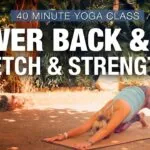
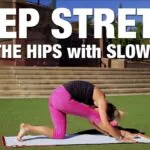
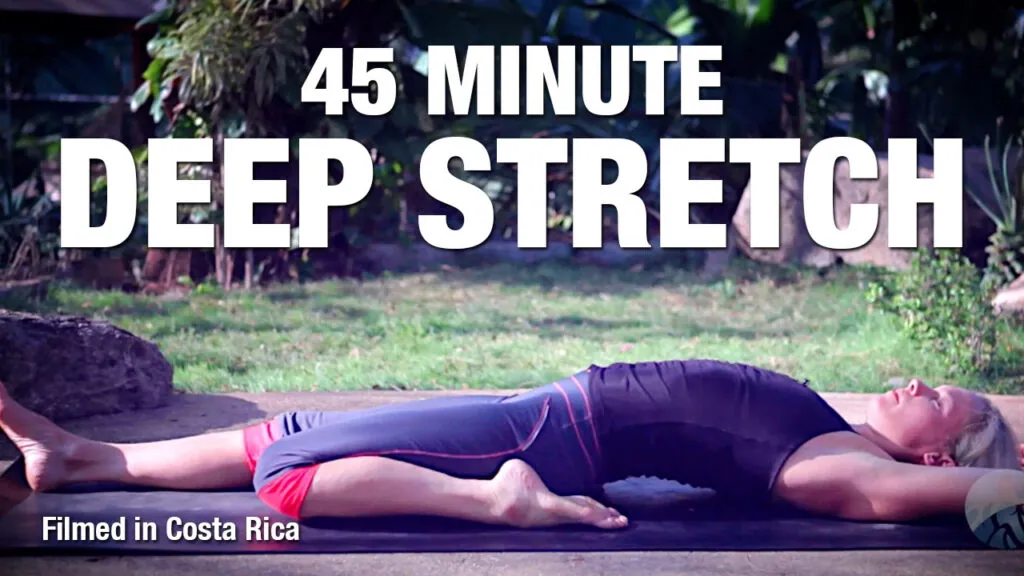
In a deep stretch class, our goal is to open the body and lengthen the muscles. The most important part of making that happen is holding the postures. That’s how I opened my 60 Minute Deep Stretch class, and it’s still true. A flow class moves you through a pose on a breath or two. A deep stretch class asks you to stay.
How long to hold
It depends on the style, so here’s how it breaks down in my classes.
Deep stretch: 7 to 10 breaths. In the 60 minute class we hold most postures for anywhere between 7 and 10 breaths. I guide you in, and then we just hold it and breathe together. The 20 Minute Deep Stretch works the same way in a shorter window.
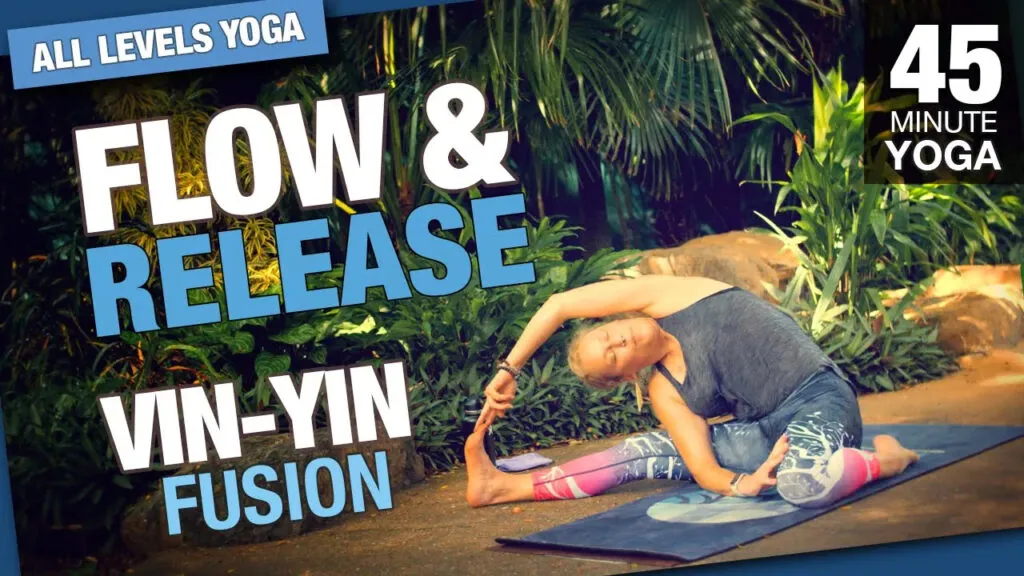
Yin-style: about two to three minutes. In yin we hold for a longer amount of time. In my Vinyasa Flow and Yin Fusion class we hold seal pose for three minutes and butterfly for two. Our final twist runs three minutes in total, a minute and a half on each side. In the Flow and Release class I tell you up front that in yin we like to hold postures for up to three minutes, and that I’m not going to promise you a three minute hold for every one.
Full yin: six or seven minutes. A traditional yin class can hold a single posture for six to seven minutes a side. I mention it in the Vin and Yin Fusion class just for your information, and then we stick to three minutes. Start shorter. You can always build.
Why longer holds? As I explain in the fusion class, holding gives the deep layers of fascia and muscle tendons time to soften and open up. The longer holds really let the body make progress in the postures.
What you should feel
This is the part that matters most. Here’s the line I use: sensation, yes. Pain, never.
In my Yin Fusion class I ask you not to go straight to 90 or 100 percent of your max. Go to a place where you feel sensation, and where you can actually release into the posture and give your muscles room to relax. In a live class I put it this way: you might feel a little discomfort as your body opens up, but no pain. If you’re in pain, make adjustments. Back off or take a break.
And I’ll be honest about the other side. Yin is an intense practice. It’s not going to feel comfy and cozy for every person, and that’s okay. The intensity should be there. That’s the point. You get to breathe through sensation, and that’s how you gain flexibility. What we’re after is real intensity without pain, and you’re the only one who can tell the difference in your body.
A few signs you’ve gone too far:
- Sharp or pinching pain, especially in a joint
- Holding your breath, or breathing in short, fast gulps
- Wincing, or clenching your jaw or teeth
What to do while you hold
Breathe. In yin I’m less focused on a powerful breath and more interested in noticing what your breath is doing. Are you panting? Breathing fast? The goal is to keep the breaths long and steady.
Keep your face soft. When things get intense there’s a temptation to wince or hold your jaw. Notice it and let it go.
Notice your mind, too. Maybe your mind is saying “please get us out of this pose.” Maybe it’s saying “oh, this is really good for my feet.” Both are fine. Everyone’s having a different experience.
Close your eyes if you like. Sometimes closing your eyes brings your focus inward so you can pay attention to what’s happening in your body.
Take breaks. In seal pose I offer crocodile as a rest. At the end, notice the difference between holding the whole time and taking breaks. Neither one is wrong.
Use props, and drop the goal
If your hips are tight or anything is uncomfortable, sit up on a block. Use your props, or just use your own knowledge of your body to adjust so you’re never in pain. And let go of how the pose is supposed to look. When I teach a forward fold in yin, the goal is not to touch your forehead to your knee. There’s really no goal. We’re just moving in that direction.
Some poses deserve extra care. Toes pose gets super intense, and if you have any feet or ankle issues, I don’t recommend it, or I suggest taking it without holding it very long.
Come out slowly
Long holds deserve slow exits. Move out of them gently, one piece at a time, and give your body a moment before the next shape. A little counter movement helps too, like a gentle rock from side to side after a long hip opener.
If you’re doing the New Year’s 30 Day Yoga Challenge this month, you’ll find the Flow and Release class in the mix. It’s a lovely way to try yin holds after the vinyasa half warms you up. And if silence feels long, put on one of my meditation and mindfulness playlists quietly in the background.
Practice it with me
- 60 Minute Deep Stretch (64 min)
- 20 Minute Deep Stretch (21 min)
- Flow and Release, Vinyasa-Yin Fusion (48 min)
- Powerful and Calming Vinyasa Flow and Yin Fusion (51 min)
- 30 Minute Deep Stretch Jungle Class (33 min)
If you’ve never stayed in a pose for three full minutes, try it once this week. Set a timer and breathe. Then notice what changed between the first breath and the last.
Practice it with me




Get new classes from Erin
Free classes, retreat dates and the occasional note. Unsubscribe any time.