If you’ve taken more than one class with me, you know how it starts. “Breathe in through your nose and hold it at the top. Let it go through your mouth.” Before we move a single muscle, we breathe.
Some people find that a little slow at first. I get it. You rolled out your mat to move. But I’ll keep doing it, because the breath is ultimately the foundation of our yoga practice. When you’re connected to your breath, you get so much more out of your postures. When you’re not, you’re mostly just doing exercises.
So here’s how I actually cue the breath in class, and why.
The cleansing breath
Almost every class I teach opens with a cleansing breath. Breathe in through your nose and fill up. Hold it at the top for a moment, which creates a little extra space in your lungs. Then let it go through your mouth with a big, audible exhale.
That first exhale through the mouth is a way of arriving. It settles you into your space and lets go of whatever happened in your day before you got to your mat. After a round or two, close your lips and begin to breathe in and out through your nose. That’s where we stay for the rest of class.
Ujjayi: the victorious breath
Once you’re breathing through your nose, I’ll invite you into ujjayi pranayama, the victorious breath of yoga. You gently constrict the back of your throat, and your breath becomes audible.
The easiest way I know to find it is to imagine you’re fogging up a mirror. Breathe out through your open mouth with that soft “haaa” you’d use on a mirror. Feel where that sound comes from at the back of your throat. Now do the same thing with your lips closed. That’s it. You should be able to hear your inhales and your exhales.
A few things I want you to know about it:
- It’s gentle. You’re not trying to sound like a movie villain. Just enough sound that you can hear yourself.
- It’s a reminder. The real value is that you can hear your breath, so you know you’re breathing intentionally and calmly. If it goes quiet, check in.
- It can match your surroundings. When I film near the ocean in Costa Rica, I’ll ask you to let your ujjayi kind of match the rhythmic sound of the waves in the background.
Breathe low, then lengthen
In child’s pose, I’ll often ask you to let your belly expand between your legs as you breathe in. Bring the breath deep down toward your tailbone instead of keeping it all up in your chest. Then let the breath travel up into the upper reaches of your lungs so your chest expands too.
From there, we start to shape the breath. Most of us move through the day in kind of a ragged rhythm. On your mat, start to move into long, slow inhales and exhales. Make each inhale and each exhale a little longer and smoother than the one before. Work toward an equal length for your inhale and your exhale. In my bedtime class we count it out, inhaling for five and exhaling for five.
Matching breath to movement
This is the part that makes a flow feel like a flow. In a vinyasa class, each movement gets its own breath. Generally you inhale as you lift or open, and you exhale as you fold or lower. Breathe in to rise up to tall mountain. Breathe out to fold forward. Breathe in for a halfway lift. Breathe out to step back.
Two cues I repeat in almost every flow:
**Take the entire length of the breath to make the movement.** Don’t rush into the pose and then wait. Let the movement fill the inhale or the exhale, start to finish.
**Go at the pace of your own breath.** I’m guiding you, but my breath is not your breath. If my pace is faster than yours, take your own. Remember the breath is the foundation, so we’re not going so fast that you run out of breath. If you lose it, slow down until you find it again. The class will still be there.
Breath in the long holds
In the poses we hold, the breath does a different job. I love long holds, and I believe they take some patience and fortitude. The breathing practice is how you build that. Slow, steady breaths in and out through your nose give you the steadiness to stay.
It works in balance poses too. Let the steadiness of your breath steady your mind, and let your mind steady your balance. And in bridge pose, you can peek down and actually watch your belly rise and fall. I really like postures where you can see your breath. It’s a good reminder of how smooth it is (or isn’t).
A note on breath of fire
Every once in a while I’ll teach a faster breath, like breath of fire, where you exhale in short bursts through your nose. If you feel light-headed or dizzy at all, don’t practice it. Just go back to your slow, steady ujjayi breathing. There’s no prize for pushing through that one.
Take it off the mat
You don’t need a mat for any of this. On a tense day, close your lips and breathe nice and slow and steady through your nose. Relax your jaw, because that’s where a lot of us hold our tension. That’s yoga too, and you can do it in a parking lot.
Practice it with me
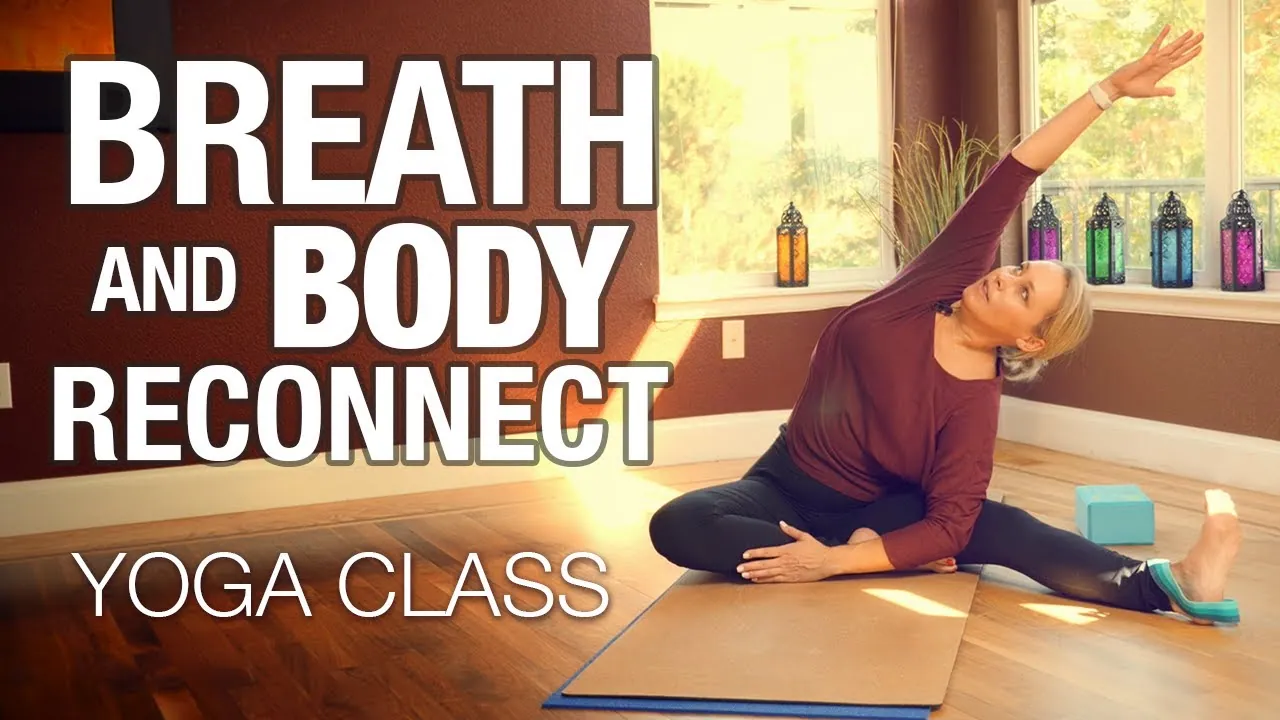
- Breath & Body Reconnect (25m 43s). Deep belly ujjayi from child’s pose all the way to shavasana.
- Throat Chakra Yoga (59m 22s). We practice the cleansing breath out loud first, then with closed lips. It’s part of my free 7-week chakra experience.
- 60 Min Fun Vinyasa Flow (55m 34s). Breath to movement, at the pace of your own breath.
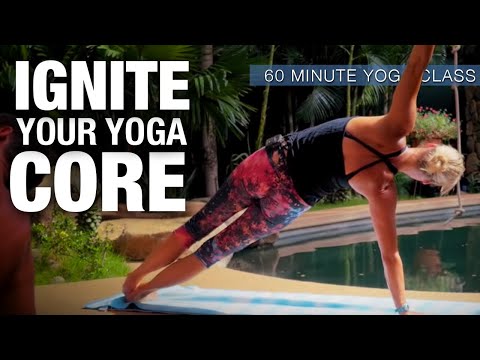
- Ignite Your Core (1h 2m 34s). Sun salutations where every movement takes a full breath. It’s in my 30 Day Athletes Yoga Challenge.
- Flow & Hold (52m 11s). Slow, steady breathing through the long holds.
- Bedtime Yoga (24m 6s). Counted breaths to wind down.
Practice it with me




Get new classes from Erin
Free classes, retreat dates and the occasional note. Unsubscribe any time.